The magic number is 18: a winter playbook for fewer site visits

Suzanne Luscombe
The magic number is 18: a winter playbook for fewer site visits
4:39
Every winter follows the same pattern. The temperature drops, the calls start, and your maintenance team spends December driving between buildings to check radiators, reset thermostats and investigate units that "feel cold". Most of those visits don't need to happen. With the right rules in place and live data from every unit, you can keep occupied spaces comfortable, keep empty ones protected, and solve most problems before anyone picks up their keys.
It starts with one number.
Why 18°C is the floor
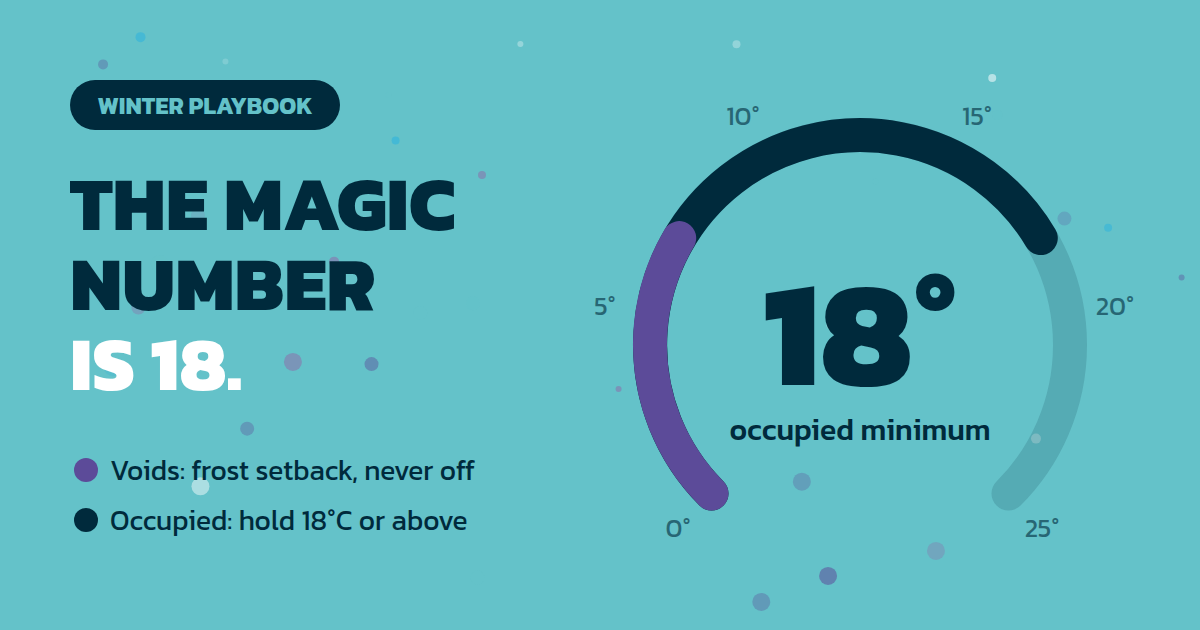
The World Health Organization's Housing and Health Guidelines set 18°C as a safe, well-balanced indoor temperature to protect health in cold seasons. It's the widely accepted minimum, and it's the right floor for any occupied unit, room or communal space this winter. The WHO also notes that vulnerable people, including older guests, young children and anyone with a respiratory condition, may need it warmer.
For operators on an all-inclusive rate, 18°C is also a sensible guardrail on the other side. A floor of 18°C protects comfort. A sensible ceiling, combined with occupancy-led setbacks when guests are out, protects your energy bill from heating left on full and up high, whilst no ones there.
Voids: frost setback, never off
It's tempting to switch the heating off in an empty unit. It looks like the cheapest option. In practice it's often the most expensive one.
A unit left to go stone cold over a winter void is exposed to three risks:
- Frozen and burst pipes. One escape of water in a void can mean weeks of downtime, an insurance claim and a unit you can't sell.
- Damp and mould. Cold surfaces attract condensation. Mould that takes hold in a void becomes the next guest's complaint, or a redecoration bill.
- A slow, expensive recovery. Heating a unit back up from cold means warming the air and the building fabric with it: walls, floors and furniture. That takes time and a big burst of energy, and the room still feels cold for hours after the thermostat says it's fine.
A frost-protection setback avoids all three. The unit sits at a low background temperature of around 9°C while it's empty, so the fabric stays dry and protected. When a booking comes in, it reaches 18°C much faster because it isn't starting from zero. That matters for last-minute arrivals and same-day turnarounds.
Triage first, travel second
The biggest winter saving often aren’t just on the energy bill. It's in your team's time.
When a guest reports a cold room, the traditional response is a site visit. With live data, the first step is a two-minute check from the platform:
- Look at the unit's live temperature and recent history. Is it actually cold, or did it just drop briefly while a window was open?
- Check whether the heating has been called for. If the rules are working and the room is warming up, the answer is a reassuring message, not a van.
- Adjust remotely. Raise the setpoint, override a setback, or switch an item like a heated towel rail on or off from the portal.
- Send someone only when the data says so. If heating is being called for and the temperature isn't moving, that's a genuine fault, and your engineer arrives knowing what to look for.
Every visit you avoid is time back for the jobs that need hands on site, and one less journey in winter weather.
Five rules to switch on this winter
- 18°C floor when occupied. Comfort and wellbeing protected, every stay.
- A sensible ceiling. Stops heating running flat out when guests don't pay the bill directly.
- Occupancy-led setbacks. Units ease back when guests are out.
- Frost setback in every void. Protected, dry and quick to bring back.
- Mould alerts. Damp and mould season starts now. An early alert is a ventilation conversation; a late one is a redecoration bill.
How resicentral helps
resicentral® runs these rules automatically, unit by unit, across your whole estate. resiAIR™ reads temperature, humidity, occupancy and air quality in real time, and every rule is fully customisable and seasonal, so your winter settings switch on when you need them.
The results show up quickly. In a controlled pilot with Lovat Parks, five equipped units were compared against five identical units without the technology. Gas consumption fell 25% over the first 13 weeks, and 33% as temperatures dropped, with electricity down 15%.
Existing client - Want your winter rules set up before December? Book a 15-minute review and we'll walk through your buildings with you.